The text arrives at 5pm. “So sorry, can’t make it tonight.”
The table is booked. The snacks are out. Someone has drawn a dungeon map by hand. The instinct is to call it off.
Don’t. Cancelling is always the worse option — not because tonight will be perfect, but because the habit of cancelling is what kills campaigns. Every cancelled session makes the next one a little easier to skip.
There are two situations, and they need different responses. Which one are you in?
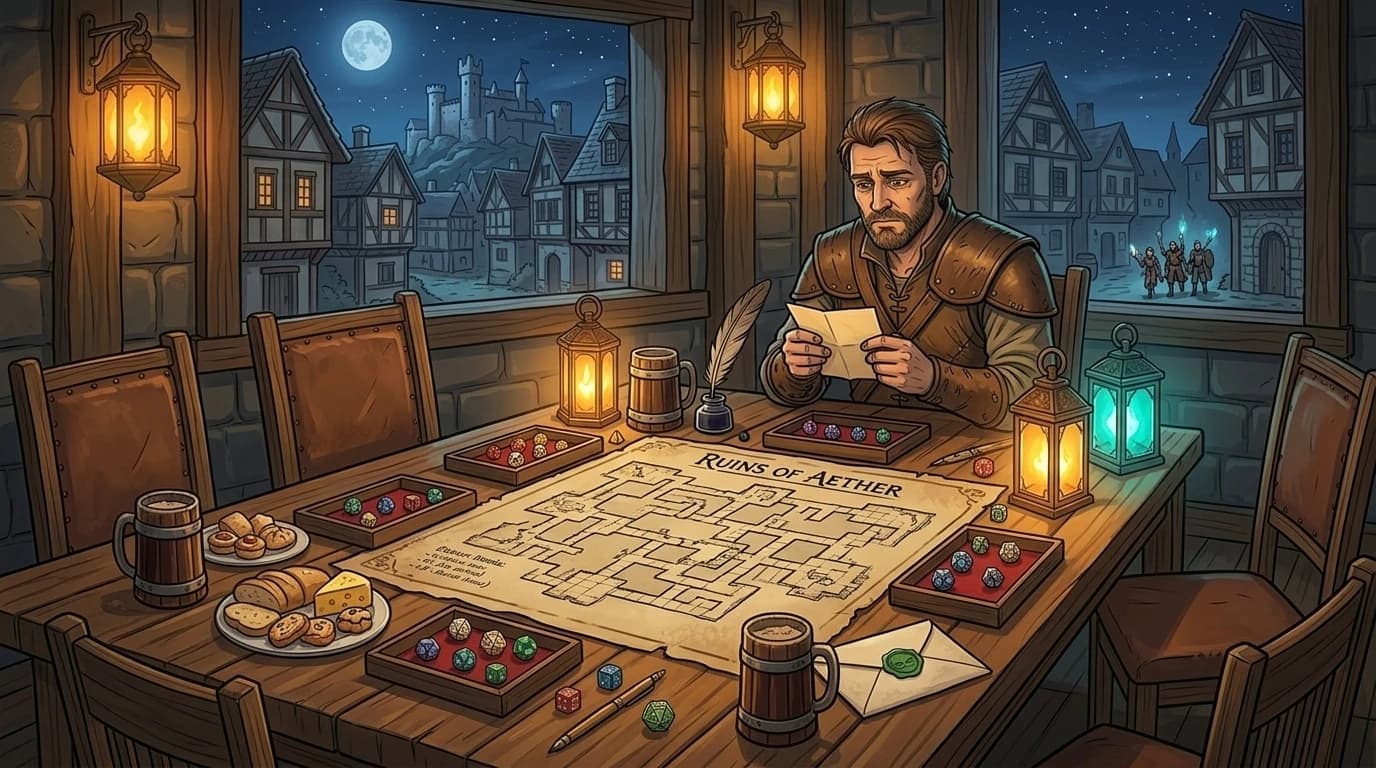
Case 1: The DM is still there
A player cancels. The GM is available. The session can still happen.
The core principle: Protect the absentee’s spotlight
The worst thing you can do is run a session where the missing player comes back to find their character did something major, earned a key item, or witnessed the reveal they’ve been building toward for six sessions. That player will feel like a spectator in their own story.
The rule: keep the absent character present but passive. Move the story forward. Don’t save the good stuff for their return. Just don’t burn it while they’re gone.
How to handle the absent character
Three approaches — pick based on tonight’s session type. (We cover these in more detail in our absent player guide.)
- Fade them out. The character is “scouting ahead,” “keeping watch,” or simply not in the scene. No elaborate excuse needed. Players accept it. Best for social and exploration sessions.
- The GM pilots them quietly. Character moves with the party, takes basic actions in combat, makes no significant choices. Don’t let the NPC’d character do anything the player would hate, die, or claim a moment that should be theirs.
- Another player runs them. Only with the absent player’s explicit blessing. Set limits: no major decisions, no spending resources beyond what’s necessary.
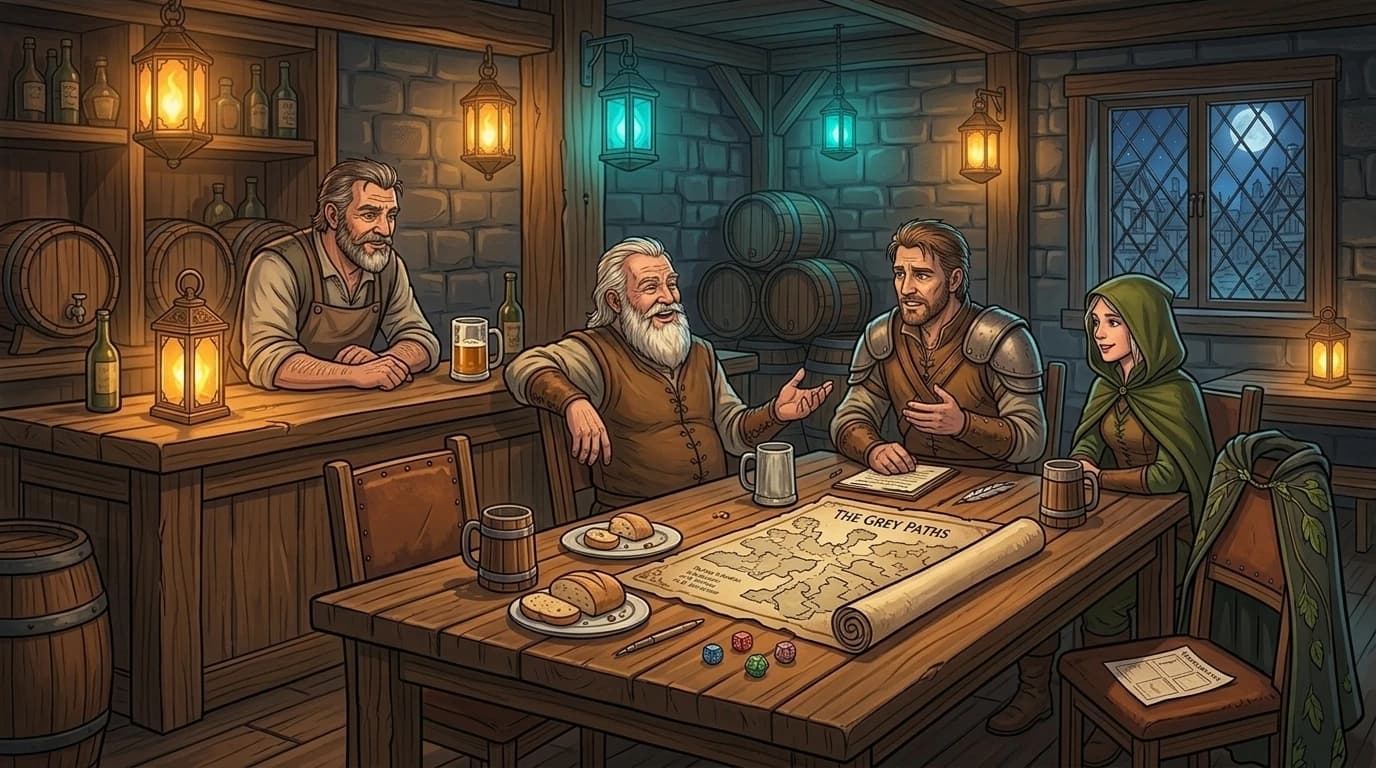
What to do with the session itself
- Run a softer session. Travel, downtime, NPC interactions, lore reveals. Satisfying to play through, low stakes if the missing player wasn’t there for it.
- Spotlight the present players. The absent player’s absence creates room to dig into the characters who are there. Give them a moment. It doesn’t have to be a full arc — a good conversation, a choice with consequences, a well-played NPC encounter.
- Avoid the big stuff. Defer major plot reveals, dramatic confrontations, or anything that will feel hollow or unfair to replay. You’re moving forward, not sprinting.
Case 2: The DM is gone
The DM cancels. The players are still available. The regular campaign can’t run — but a session still can.
The pivot: Run a one-shot instead
This is the move most groups never try, and it’s the one that keeps campaigns alive through rough patches. Someone at the table — not the main DM — volunteers to run something completely separate. A standalone adventure. New characters. No continuity required.
The stakes are zero. The fun can still be high.
- It keeps the habit of showing up intact. The social glue that holds groups together is the routine of game night. A one-shot preserves that even when the main campaign can’t run.
- It gives the substitute GM a low-pressure first run. No lore to get wrong. No continuity to break. Just a fun evening with dice.
- It gives the regular DM a guilt-free night off. They don’t have to feel like they’ve damaged the campaign by being unavailable.
On being a substitute DM
The biggest barrier is “I don’t know the rules well enough.” This is the wrong worry.
- Rulings over rules. If you’re unsure, pick the option that moves the story forward and makes the scene feel exciting. Nobody remembers a perfectly adjudicated grapple check. Everyone remembers the moment the fighter leapt off the burning cart.
- Pre-made adventures do the heavy lifting. They come with stat blocks, room descriptions, and encounter structure. Your job is to bring energy and say “yes, and.”
- Keep scenes moving. The one genuine skill that matters. If something stalls, skip to the next interesting thing.
Free one-shots worth keeping on standby
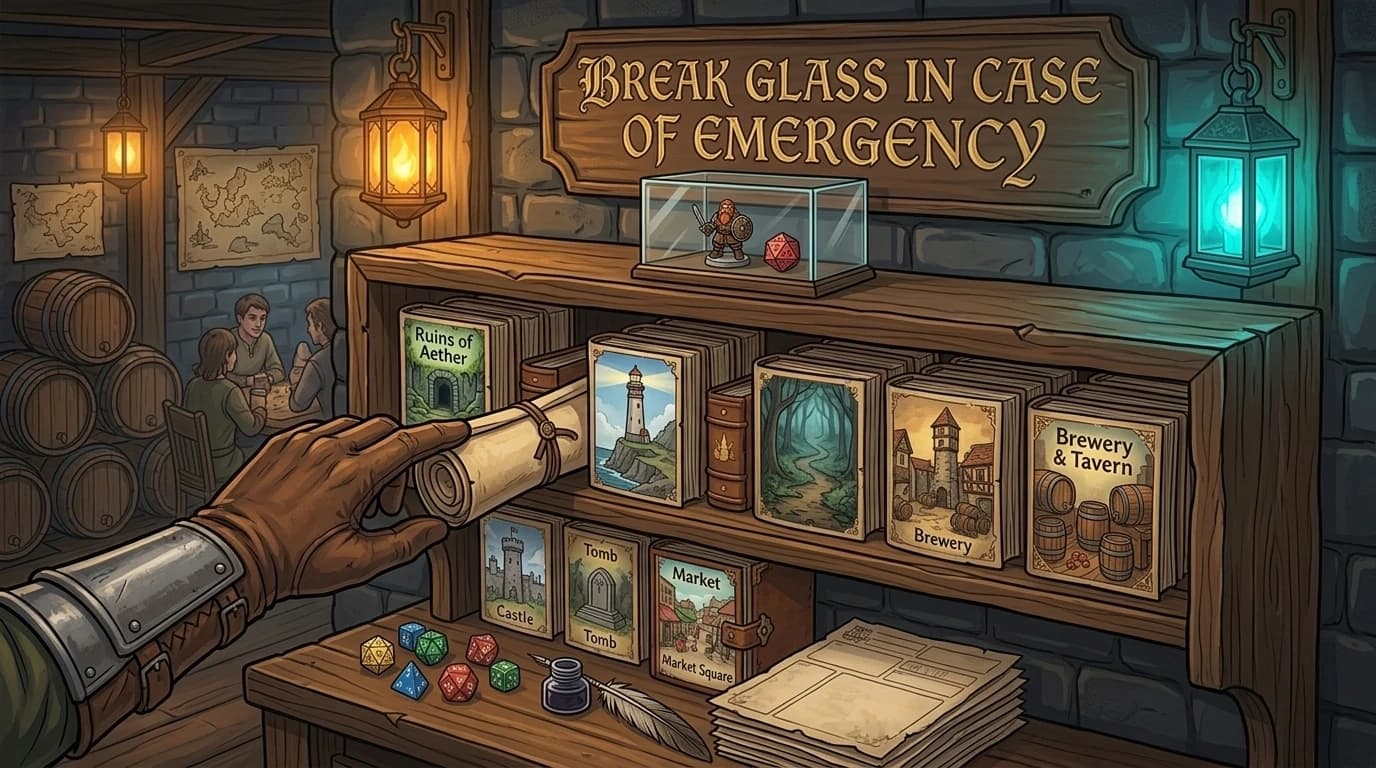
Download at least one of these now. Keep the PDF somewhere you can find it in thirty minutes. The time to prep the backup plan is not when you need it.
- A Most Potent Brew (Winghorn Press, free). Level 1, self-contained, uses only the free basic rules. The gold standard for “grab and go.” Available on DMs Guild.
- The Delian Tomb (Matt Colville, free). Level 1, three to four hours, cleanly structured. One of the most well-regarded beginner one-shots around. Available from MCDM.
- Wild Sheep Chase (Winghorn Press, free). Three to six hours, complete with maps. Polished enough to run with almost no prep. Available on DMs Guild.
- Peril in Pinebrook (Wizards of the Coast, free). About ninety minutes, simplified ruleset. Great when you have even less time than usual. Available on D&D Beyond.
- The Secrets of Skyhorn Lighthouse (free). Level 5, bullet-pointed for easy running. Consistently praised for how GM-friendly the format is. Available on DMs Guild.
The bigger picture: Why you should always try to play something
Momentum is a campaign’s most fragile asset. The longer the gap between sessions, the harder it becomes to restart. Every cancelled session isn’t just a lost evening — it’s a tiny crack in the habit that holds your group together.
Consistent groups play even when conditions aren’t ideal. That consistency — more than prep quality, more than system choice, more than GM skill — is what separates groups that finish campaigns from groups that don’t.
A session played, even imperfect, beats a session cancelled. Every time.
The Short Version
Never cancel reflexively
A session played, even imperfect, beats a cancelled one for campaign momentum
If the DM is available: run a softer session
Keep the absent character passive — hold pivotal moments for when everyone’s there
If the DM is out: pivot to a one-shot
Someone else runs it, different characters, no continuity pressure
Substitute GM anxiety is normal and irrelevant
Rulings beat rules — keep scenes moving, let the pre-made do the heavy lifting
Keep a one-shot downloaded before you need it
The time to prep the backup plan is not when you need it
Showing up regularly is what finishes campaigns
Consistency beats perfection — every time
The table doesn’t have to be perfect. It just has to be set.