Most campaigns never finish. They don’t end dramatically — they just drift.
One missed session becomes two. The group chat goes quiet. Nobody officially calls it, and that’s somehow worse than a clean ending. You don’t get a final boss fight. You get a slow fade to silence.
The causes are almost always the same. Here are the five that kill the most campaigns — and what you can do before yours joins the graveyard.
Cause 1: Scheduling Drift
This is the number one killer. It deserves to be said plainly: scheduling drift ends more campaigns than bad storytelling, bad dice luck, and inter-party conflict combined.
Campaigns don’t die at crisis moments. They die during the quiet stretches. “We’ll sort out the next date” becomes two weeks, becomes a month, becomes nobody mentioning it at all. Each gap makes the next session harder to organise. Players disengage. Prep feels wasteful. Momentum evaporates.
The compounding effect is brutal: a bi-weekly group that misses one session a month is functionally a monthly group — and monthly groups have a much harder time sustaining long narratives.
How to Fight It
- Lock in the next session before the current one ends. While everyone’s still at the table and invested. This single habit saves more campaigns than any other. (We cover this in detail in our scheduling frequency guide.)
- Treat the schedule as a recurring commitment. Not an ad hoc arrangement. “Every other Thursday” is a commitment. “Whenever we’re all free” is a wish.
- Remove the friction of finding the slot. The group-chat polling loop kills momentum. Roll4Availability lets everyone mark their weekly availability once so you can see the overlap at a glance — no more “does Tuesday work?” threads that take a week to resolve. (Using When2Meet or Doodle for this? See how they compare for recurring games.)
- Set a quorum. So one absence doesn’t cancel the whole night.
Cause 2: GM Burnout
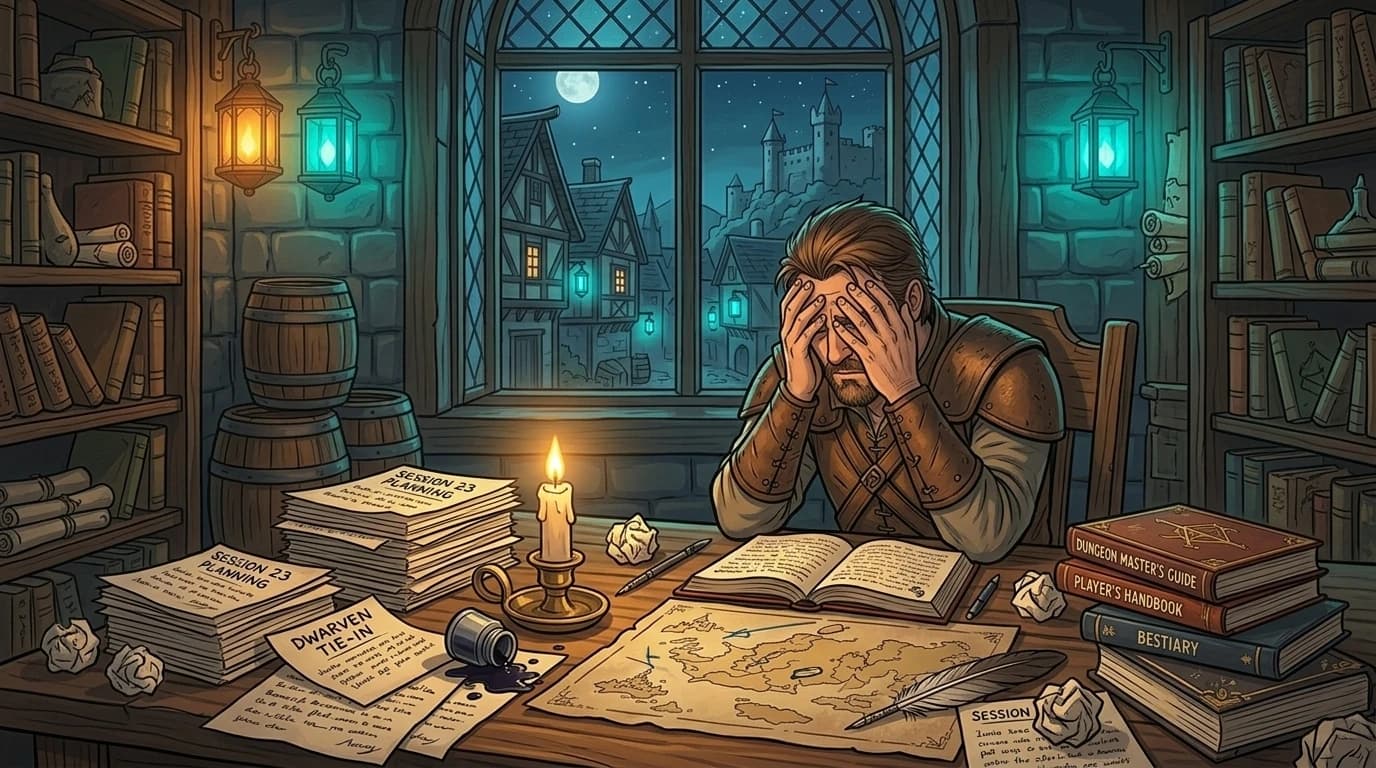
The second most common killer, and the one nobody wants to admit to. GMs carry an asymmetric prep load. Players show up and play. GMs build the world, write the encounters, track the NPCs, and manage the table. When sessions feel poorly attended or disengaged, that prep starts to feel pointless.
GM burnout usually precedes campaign death by weeks. Sessions get shorter. The plot stalls. Energy drops. The signs are visible if you know where to look: the GM stops updating the group chat, sessions start late, campaign prep shrinks to the night before.
How to Fight It
- Reduce prep requirements. Not every session needs elaborate set pieces. A character-driven conversation session or an improvised encounter costs almost nothing to prepare and can be some of the best sessions you run.
- Share the load. Let players take session notes, run downtime scenes, contribute world lore. The GM doesn’t have to do everything.
- Run shorter campaigns or arcs with defined endpoints. A six-session arc that finishes beats an open-ended campaign that stalls at session twelve. Completion is motivating.
- Communicate early. “I’m struggling with prep” is a recoverable situation. Silent dropout is not. Your players would rather help than lose the campaign.
Cause 3: Player investment drops
This one happens gradually, often invisible until a player starts cancelling. The character concept isn’t working. The story has lost them. Real-life priorities have shifted. By the time it’s obvious, they’re already half-gone.
The common GM mistake: adjusting the entire plot to re-engage one disengaged player while losing three others in the process.
How to Fight It
- Check in between sessions. A quick “how are you finding the campaign?” message catches problems early. Don’t wait for someone to stop showing up to ask.
- Give each player a moment to shine. At least once per arc. Not just combat — roleplay, decisions, consequences that matter to their character specifically.
- Offer a respec if the character isn’t working. A new character concept or a reintroduction is better than a disengaged player phoning it in for twelve more sessions.
- Accept that some players will leave. Plan for it. Have a policy for absent players and don’t let one departure kill the whole campaign.
Cause 4: Campaign scope creep
You pitch a short arc. Players get invested. The campaign expands indefinitely. That expansion feels like success — it’s actually a risk.
The longer the campaign, the harder it is to maintain scheduling consistency over months and years. Players’ lives change. Jobs shift. People move. A campaign that needed six months is now in its second year, and half the table has a different schedule than when you started.
How to Fight It
- Set explicit endpoints. “We’re running until the party defeats the Lich King” or “this is a ten-session arc.” A destination keeps everyone oriented.
- A campaign that ends well beats one that fades. Reaching the finale — even a modest one — is infinitely more satisfying than the slow drift into nothing.
- A series of shorter campaigns beats one endless one. Your completion rate goes up. Player satisfaction goes up. And you get to try new settings, systems, and characters between arcs.
- Use “season” framing. Run the campaign in defined seasons with natural pause points. At the end of each season, check in: does the group want to continue, or is this a good place to wrap?
Cause 5: Unresolved table conflict
Less common than scheduling or burnout, but often fatal when it occurs. Player-vs-player conflict that spills out of the game. One player consistently making sessions worse for others. Unaddressed rules arguments that curdle into personality clashes.
The GM hoping it resolves itself is the most common response. It won’t.
How to Fight It
- Address issues privately and promptly. The longer it goes, the harder the conversation becomes. A quiet DM after session two is much easier than a group intervention at session ten.
- Reference the table agreement from Session Zero. If you established expectations in your Session Zero, pointing at a pre-agreed standard is much easier than making it personal.
- Sometimes a player leaving is the best outcome. For everyone, including them. A table where one person is miserable is a table where everyone is affected.
The Early Warning Signs
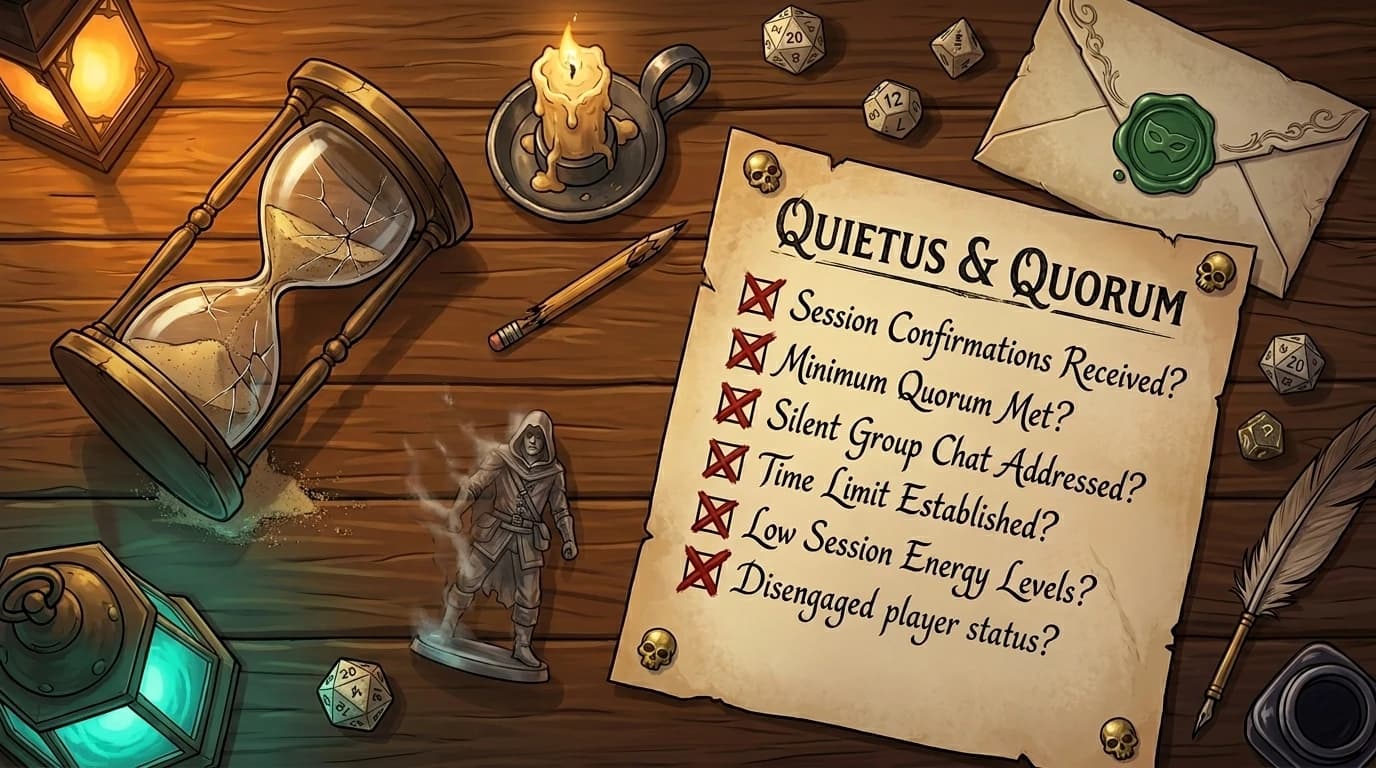
Campaigns rarely die without warning. Here’s a quick diagnostic — if three or more of these sound familiar, it’s worth having a direct conversation now, before it becomes a post-mortem.
- Sessions are being cancelled more than they run. The schedule is no longer holding.
- GM prep is getting shorter and shorter. Motivation is dropping. The prep that used to take a weekend now happens the night before.
- Players are forgetting what happened last session. The gap between sessions is too long, or investment has dropped.
- The group chat has gone silent between sessions. No memes, no theories, no “that session was wild” messages. Silence between sessions is a leading indicator.
- Nobody is asking “when’s the next session?” When the players stop chasing the schedule, the campaign is in trouble.
- Sessions are ending early without satisfying conclusions. The GM is running out of energy or material mid-session.
The Short Version
Scheduling drift kills more campaigns than bad storytelling
Lock in the next session before the current one ends
GM burnout is real
Reduce prep load, run shorter arcs, communicate early
Player disengagement is gradual
Check in between sessions, not just in-game
Scope creep turns campaigns into marathons
Set explicit endpoints — run in seasons
Table conflict needs direct handling
It won’t resolve itself — address it privately and promptly
The early warning signs are visible
Don’t wait for a crisis to act on them
The campaign graveyard is full of games that almost made it. Yours doesn’t have to be in it.