Session Zero is the most important session you’ll never roll dice in.
It’s the meeting — before the adventure begins — where your group aligns on what kind of game you’re all signing up for. Done well, it prevents the awkward mid-campaign conversations, stops characters from clashing catastrophically, and dramatically increases the chances your campaign actually finishes.
Here’s everything you need to cover.
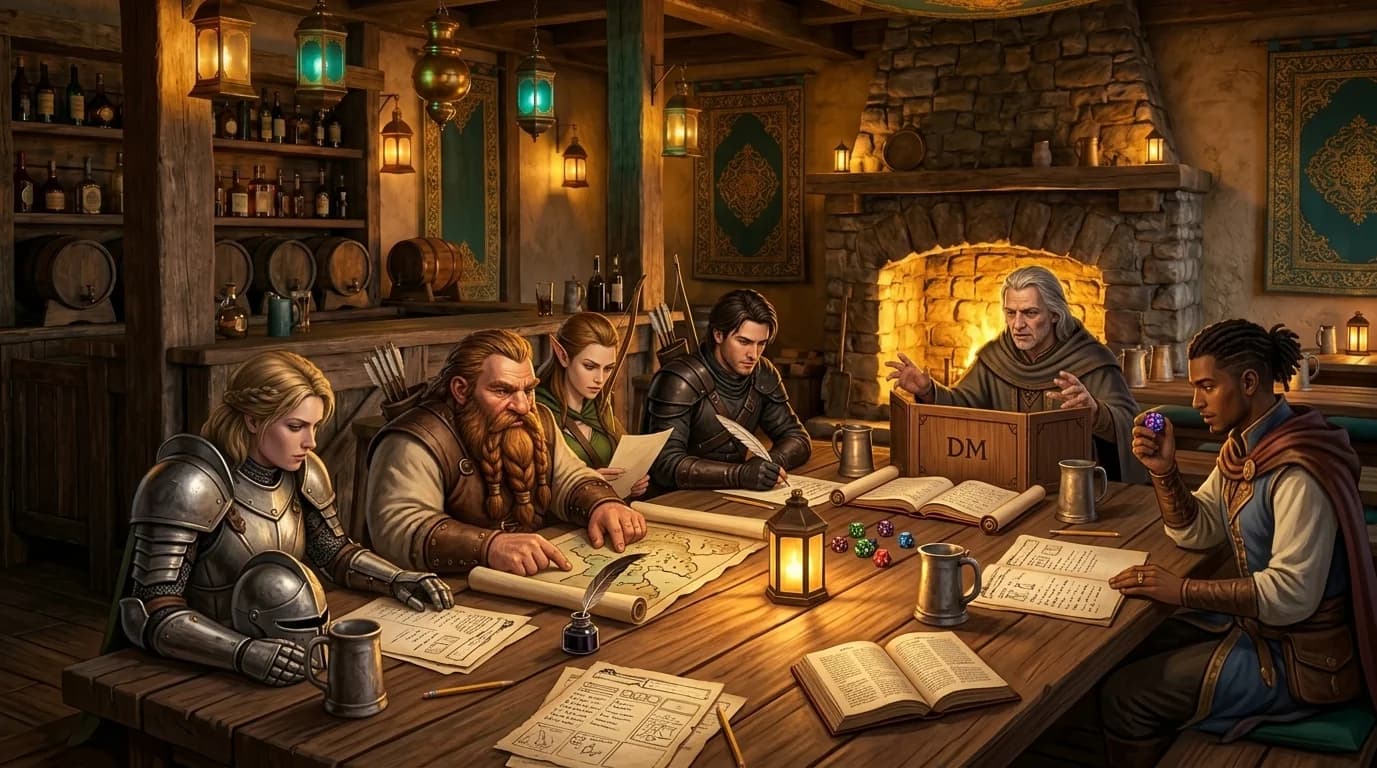
Before You Meet
Sort out the logistics first
The most common reason campaigns die isn’t bad storytelling — it’s bad scheduling. Before you discuss lore, alignment, or backstory, nail down the practicalities:
- When will you play? Pick a recurring slot that works for everyone — weekly, biweekly, or monthly
- How long is each session? Typical sessions run 3–4 hours; agree on this upfront
- Where? In person, online (Roll20, Foundry, Owlbear Rodeo), or a mix
- How many players? 4–5 is the sweet spot; 6 is manageable; more gets complicated
- What’s your quorum? Can you run with 3 of 5 players, or does everyone need to be there?
- How will you handle last-minute cancellations? Agree on a policy before feelings get hurt
The GM’s Prep Checklist
1. Pitch the Campaign
Give your players enough to get excited without spoiling the whole story:
- Genre and tone — High fantasy? Dark horror? Political intrigue? Heist? Knowing the vibe prevents the player who built a slapstick bard from joining a grim survival horror game.
- System — What are you using and why? Not everyone at the table may know it.
- Premise — One sentence is enough. “A crew of outcasts must escort a cursed artefact across a dying continent.”
- Expected length — One-shot, short arc (4–8 sessions), or full campaign (months)?
- Setting — Published world or homebrew? Give players enough context to build characters that fit.
2. Set Table Expectations
This is where most GMs skip ahead too fast. Don’t.
- Combat vs. roleplay ratio — Some players want dungeon crawls; others want political drama. Know your table.
- Roleplay expectations — Are you doing voices? In-character dialogue? Theatre of the mind or grid maps?
- Player agency — How much will player decisions shape the story? Is this a sandbox or a structured narrative?
- Death and consequences — Is this a lethal game? Do characters have plot armour? What happens if someone dies at level 2?
- Rules as written vs. rulings — Are you running strict RAW, or is there DM fiat when the rules get in the way of fun?
- Homebrew — What house rules are in play from day one? Critical hit tables? Modified resting rules? Spell changes?
3. Cover Safety and Comfort
This isn’t optional. It makes the game better for everyone — including the people who think they don’t need it.
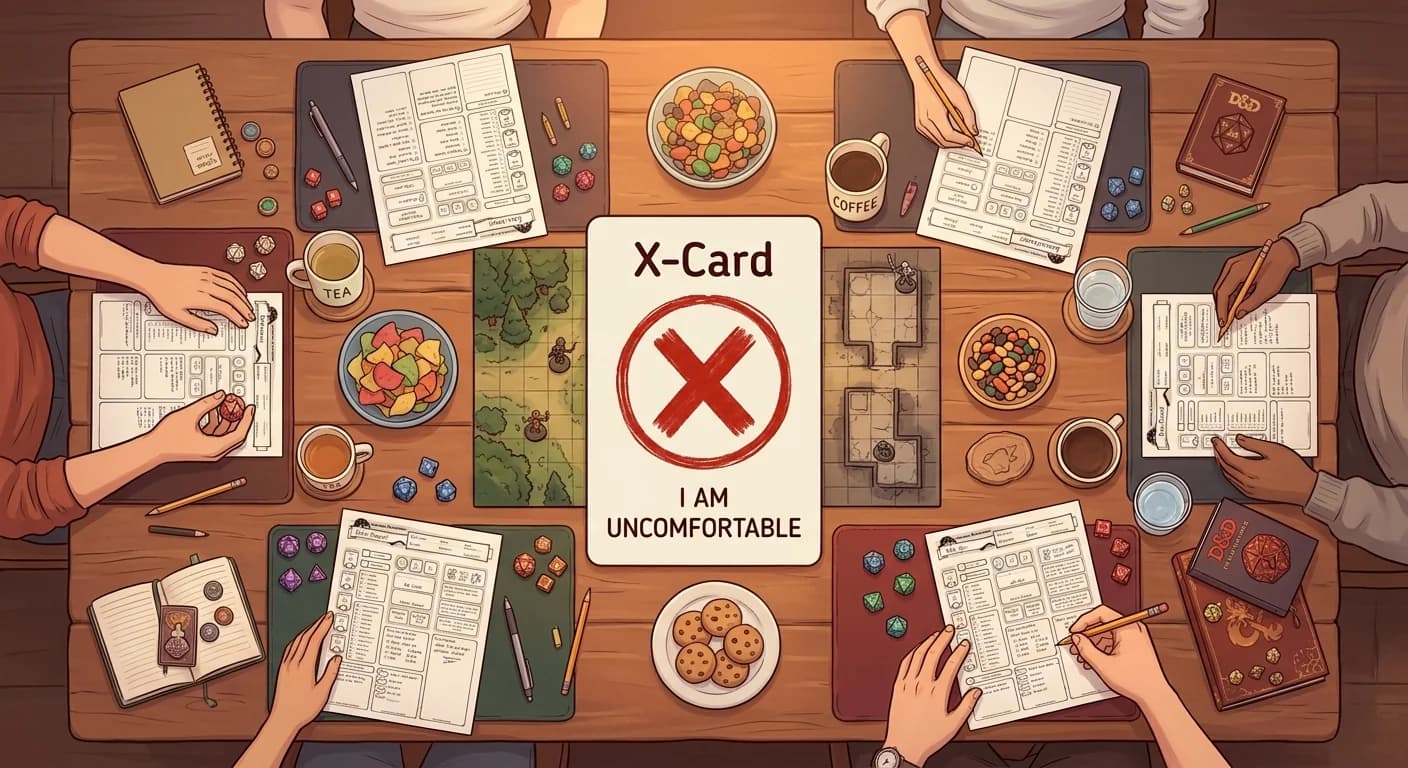
- Lines and veils — Lines are content that won’t appear at all; veils are content handled offscreen. Ask your players.
- The X-Card — A simple, no-questions-asked way to skip past uncomfortable content. Introduce it.
- Open door policy — Anyone can step away from the table, no explanation needed.
- Out-of-game communication — How will players flag issues? (DM privately, post-session chat, a shared doc?)
What is the X-Card?
The X-Card is a safety tool created by John Stavropoulos. It’s dead simple: place an index card with a large “X” on the table (or use a virtual equivalent in online play). At any point, any player can tap or raise the X-Card, and the current scene is immediately rewound or skipped — no questions asked, no justification required.
The point isn’t to police content. It’s to create a low-friction escape valve so that everyone knows they have an out if something crosses a personal boundary they didn’t anticipate during the Lines and Veils discussion. Sometimes you don’t know a topic bothers you until it comes up in play.
In practice, the X-Card is rarely used — but knowing it exists makes players more willing to engage with challenging themes, not less. It’s insurance, not censorship.
What is Lines and Veils?
Lines are hard limits — content that will not appear in the game under any circumstances. If someone draws a line at graphic torture, it simply doesn’t happen at your table. No debate, no “but my character would...”
Veils are content that can exist in the story but happens offscreen, like a film cutting away. Romance might be veiled: “your characters spend the evening together” — then the scene fades to black and we move on. Veils let mature themes exist in the narrative without making anyone uncomfortable at the table.
Common topics to address explicitly:
- Violence and gore
- Sexual content and romance
- Real-world trauma themes (addiction, abuse, mental illness)
- Player-vs-player conflict
- Character death
- Phobias (spiders, drowning, confined spaces, etc.)
The Players’ Checklist
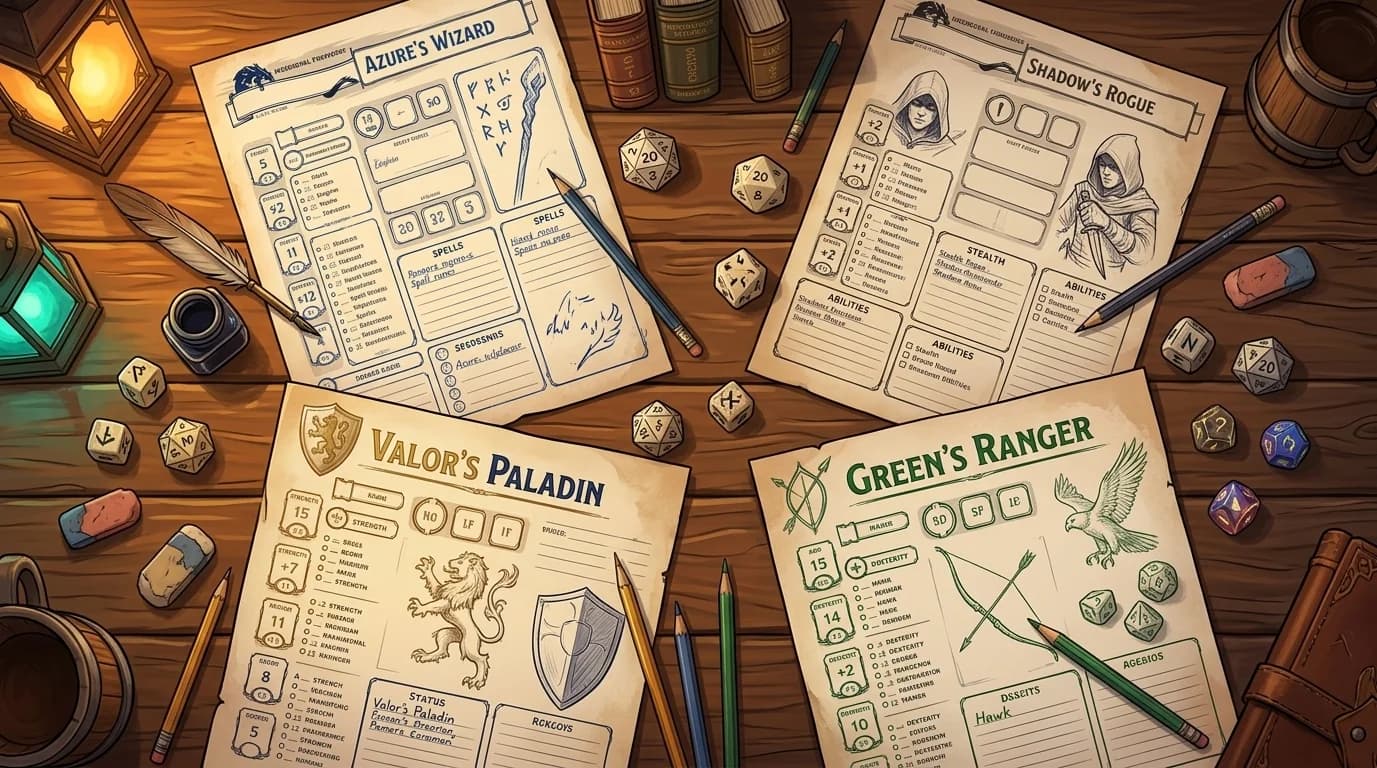
4. Character Creation
- Approved sources — PHB only? All official books? Third-party content?
- Starting level and equipment — Standard array or point buy? Starting gold or fixed gear?
- Multiclassing and feats — Allowed? Restricted? Some GMs ban certain combos for balance.
- Backstory depth — One paragraph or full novel? Does the GM want plot hooks woven in?
- Do characters know each other? Or are you strangers meeting in a tavern? (Spoiler: the first option is almost always better.)
- Party composition — Is anyone filling the “healer” role? Does it matter in your system?
- Discuss concepts before committing — Avoid two players independently building the same edgy rogue loner.
5. Make sure characters fit the world
- Does each character have a reason to adventure?
- Does each character have a reason to stay with the party? (This one matters more than people think.)
- Are there any concepts that conflict with the campaign setting? (e.g. playing a Paladin of a god who doesn’t exist in this world)
- Does the GM know enough about each character to weave them into the story?
Group Agreement Checklist
6. Establish Shared Expectations
These are the conversations that feel awkward to have mid-campaign but take five minutes in Session Zero:
- Phones at the table — Allowed? Banned? Emergency only?
- Being on time — What happens if someone’s late? Do you start without them?
- Absence policy — How much notice is needed? How are absent characters handled? (Does the GM play them? Do they fade into the background? Do they vanish into a pocket dimension?)
- Food and breaks — Snacks? Mid-session break? Clear the table at the end?
- Between-session communication — Discord? WhatsApp? How much out-of-character chat is expected?
- Notes — Is anyone keeping session notes, or is that the GM’s job? (Hint: it shouldn’t just be the GM.)
7. Agree on Conflict Resolution
Not player-vs-enemy conflict — player-vs-player.
- Is PvP (player versus player) allowed? If so, under what circumstances?
- What if a player’s character actions ruin another player’s fun?
- Who does someone talk to if something at the table isn’t working? (Usually the GM, privately)
Optional but Recommended
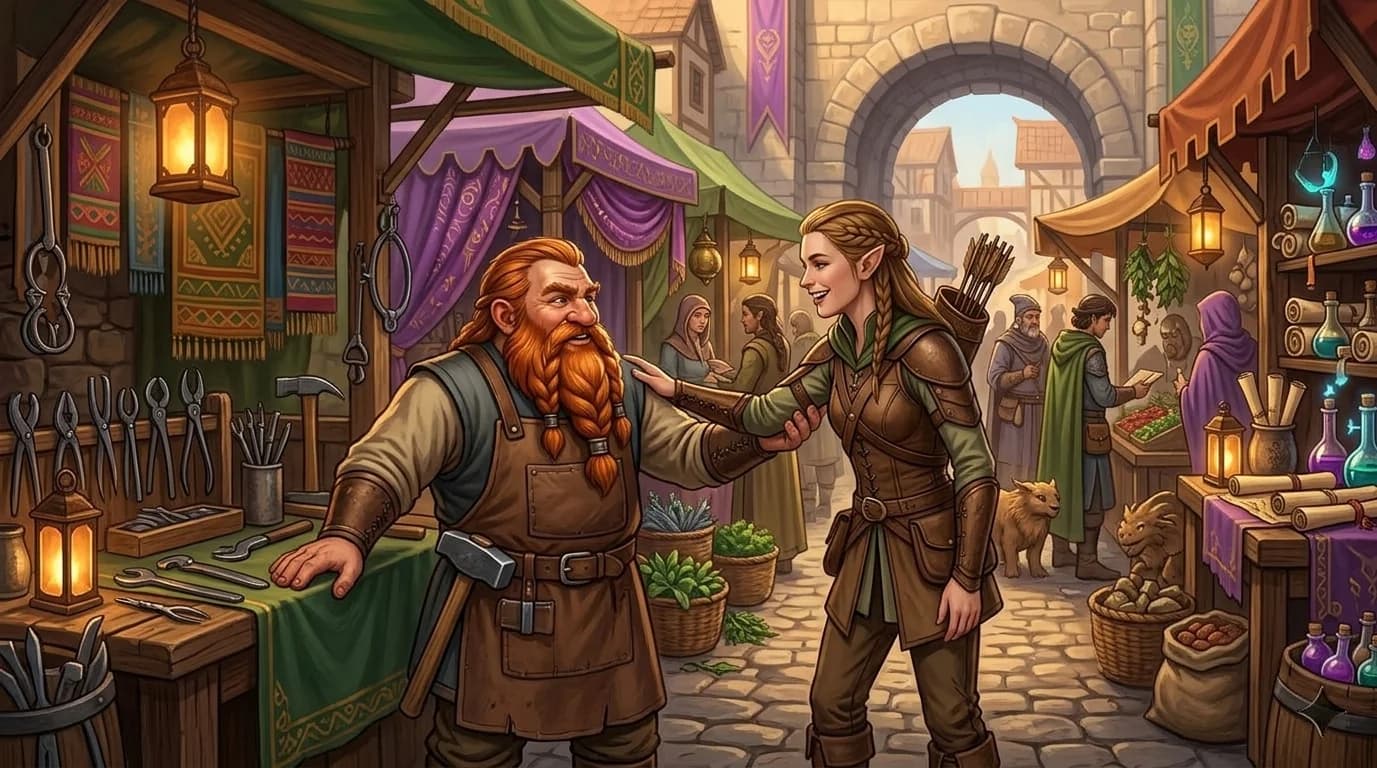
Character Connections
Have each player describe how their character knows — or has at least heard of — one other character. It prevents the “strangers meet in a tavern” cold start and gives the GM immediate roleplay hooks. Even something simple works: “We both survived the same shipwreck” or “You owe me money.”
Session Zero as a one-shot
Some GMs run a short prologue encounter in Session Zero — a low-stakes scene to introduce characters, test the system, and get everyone comfortable before the real campaign begins. A bar fight, a caravan ambush, or even a shared dream sequence. Highly recommended for new groups or new systems — it turns abstract character concepts into living, breathing people at the table.
The Living Document
Create a shared note (Google Doc, Notion page, Discord pinned message) that captures everything agreed in Session Zero. Include:
- Campaign name and premise
- House rules
- Lines and veils
- Scheduling agreement
- Character names and brief concepts
Everyone has it. Nobody can claim they didn’t know.
After Session Zero: Lock in your schedule
You’ve aligned on the game. Now make sure you actually play it.
The most common campaign killer isn’t a lack of enthusiasm — it’s the slow erosion of momentum when sessions keep getting postponed. Set your recurring schedule now, while everyone’s excited, and use a tool that makes it easy to see when everyone’s free and lock in the next session before the last one ends.
The Short Version
If you only do five things in Session Zero, make it these:
Agree on a recurring schedule
and actually lock it in
Set the tone and genre
so everyone’s playing the same game
Cover lines and veils
so nobody’s blindsided
Sort character concepts together
avoid duplication and disconnection
Write it down
so there’s no “I didn’t know” two months later
Good luck, GM. May your players show up on time and your dice roll true.