Every TTRPG player has been here: excited to play, nowhere to play it.
The “finding a group” problem feels harder than it is, mostly because people look in the wrong places or don’t know what to say when they find one. You don’t need to be lucky. You need to know where to look and what to look for.
This is the practical guide.
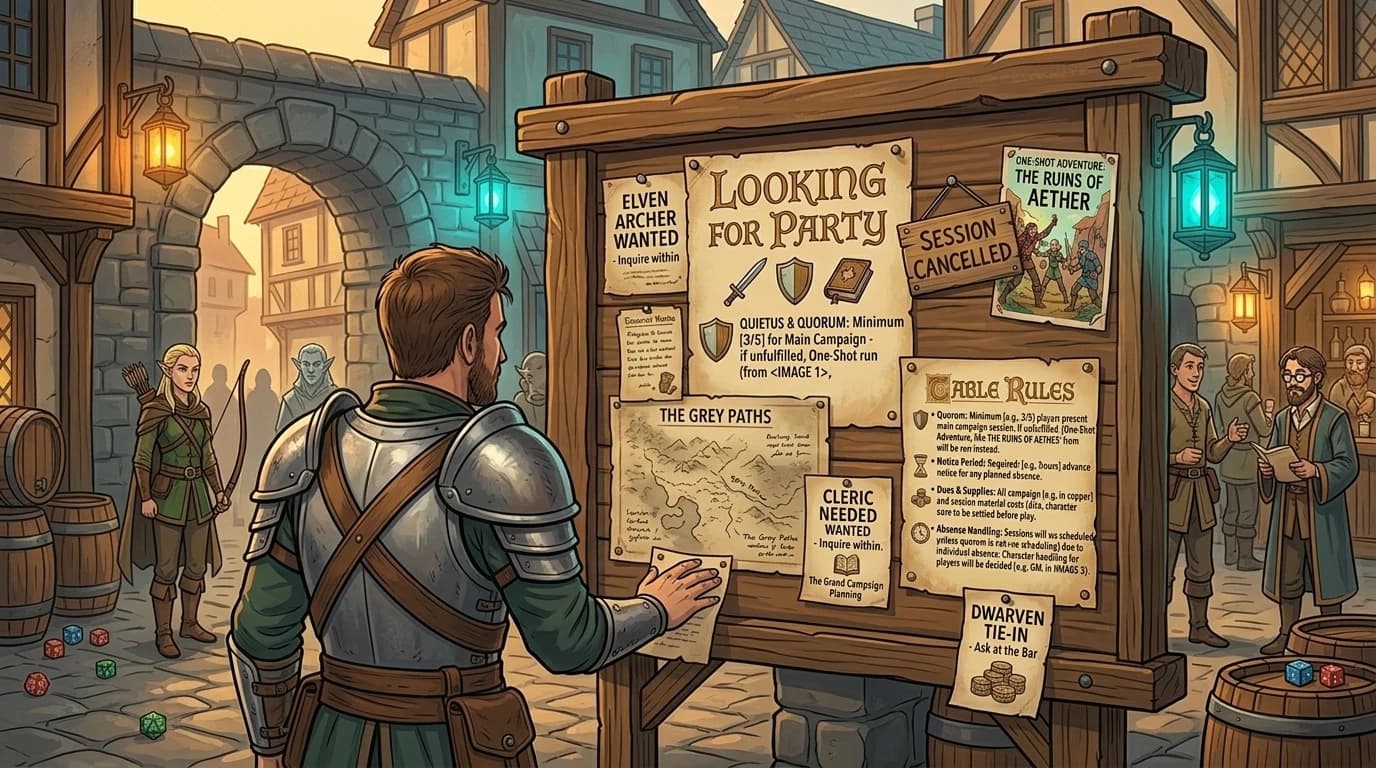
In person: The options that still work
Local Game Stores (FLGS)
Your friendly local game store is still the single best starting point for finding an in-person group. Most run organised play events — D&D Adventurers League, Pathfinder Society — and have notice boards, staff who know the local scene, and a built-in community of people looking for the same thing you are.
The first step is genuinely that simple: walk in and ask if there’s a board or an events calendar. Organised play is also a low-commitment way to try a system and meet players before committing to a full campaign group.
Gaming Clubs and Conventions
- University gaming societies. If you’re a student or near a campus, this is often the fastest route to a group. Most run multiple tables and are actively looking for new players.
- Local RPG conventions. Not just for buying things. Open gaming tables, organised one-shots, and GM matchmaking are standard features. Even small regional cons run sign-up games.
- Meetup groups. Tabletop gaming groups on Meetup exist in most mid-to-large cities. The quality varies, but the barrier to entry is low.
Friends and Colleagues
The underrated route. Most people know someone who plays, or know someone who used to. The pitch — “I want to try D&D, do you know anyone who plays?” — travels further than you’d expect. Starting a group with people you already know has real advantages: shared trust, easier scheduling, and a lower awkwardness floor than sitting down with strangers.
Online: Where most groups form now
Discord
Discord is the primary hub for online TTRPG communities. Large servers for D&D, Pathfinder, and system-specific communities all have dedicated LFG (Looking for Group) channels. The key to using them well: write a short introduction covering your experience level, preferred system, timezone, and availability. “Hi, I’m new to D&D, GMT timezone, free Thursday and Saturday evenings” gets responses. A vague “anyone want to play?” gets ignored.
r/lfg (Looking for Game) is active, well-structured, and sorted by system and online/offline. Most subreddits have post templates — use them. Include your timezone, system, experience level, and availability in the title. Also worth browsing existing posts to understand what groups are looking for before you write your own.
Virtual Tabletop Platforms
Major VTT platforms have their own LFG forums and matchmaking features. One-shot focused games are common on these platforms — a low-commitment way to audition groups before committing to a full campaign.
Paid games: A valid option worth knowing about
Professional GMs run games on dedicated platforms. Players pay per session or per campaign. This isn’t a “lesser” option — it’s a real alternative.
- Who this is for: players who want a reliable, high-quality experience and are willing to pay for it. Players who struggle to find a consistent free group. People with limited time who want guaranteed sessions that actually happen.
- Who it’s not for: people who want to GM themselves, or who want the specific social dynamic of a peer group where everyone is equally invested in the social side.
What to look for in a group before you commit
Finding a group is the easy part. Finding the right group takes a bit more attention.
Red flags in LFG posts
- No mention of schedule or frequency. Scheduling is an afterthought. If they haven’t thought about when they’ll play, they haven’t thought about how they’ll keep playing.
- “We’re very experienced” with no further context. Can mean welcoming. Can mean hostile to new players. Without clarification, it’s a coin flip.
- Very long list of player conduct rules in the LFG post. A sign of a group that’s had problems. Rules are fine. A wall of them in a recruitment post suggests a troubled history.
- Replacing a player mid-campaign with no explanation. Not always a red flag — people leave for legitimate reasons. But if the post doesn’t mention why, it’s worth asking.
Green Flags
- Clear session frequency and expected commitment. They’ve thought about the schedule. That alone puts them ahead of most groups.
- Mention of Session Zero. A group that runs a Session Zero has thought about expectations, safety, and tone. That’s a group that cares about the experience.
- The GM describes the campaign tone. They’ve thought about what kind of game they want to run — not just “D&D campaign, need players.”
- Transparent about experience level expected. “New players welcome” or “looking for experienced roleplayers” — either is fine. Clarity is what matters.
The Trial Session
Good groups offer a Session Zero or a single trial session before asking for full commitment. If a group won’t give you a trial, that’s useful information. Come prepared: know a bit about the system, have a character concept (even a rough one), and know your availability. First impressions go both ways.
Once you’ve found one: The scheduling reality
Finding the group is step one. Keeping the group playing regularly is where most campaigns actually struggle — and that’s a different problem entirely.
New groups are most vulnerable in the first two or three sessions, before habits form and before investment runs deep. Set a recurring session slot before the first session — while everyone’s excited and before competing commitments fill the calendar. Agree on a session frequency and a quorum up front.
A note on starting your own group
If finding an existing group proves difficult, starting one is often faster. You don’t need to GM yourself — “I want to start a group, who wants to play?” plus finding a willing GM is a perfectly valid division of labour.
- People you know vs. strangers. Starting with work colleagues or friends of friends has different tradeoffs than recruiting strangers. Known groups start with trust but may have scheduling constraints. Stranger groups are more flexible but take longer to gel.
- Short commitment framing helps. “We’re running a five-session one-shot to start” lowers the barrier dramatically. People who won’t commit to a year-long campaign will happily try five sessions. If it works, you keep going. If it doesn’t, nobody’s stuck.
The Short Version
Local game store first
Organised play events are the fastest real-world route
r/lfg and Discord LFG channels
The most active online sources — include your timezone and availability
VTT one-shots are a low-commitment trial
Audition groups before committing to a full campaign
Vet the group before committing
Session frequency, GM communication style, and a trial session matter
Starting your own group is often faster
A five-session one-shot lowers the barrier for new players
Lock in the schedule before the first session
New groups are most fragile in the first few weeks
The hardest session to schedule is the first one. After that, it gets easier — as long as you actually schedule it.